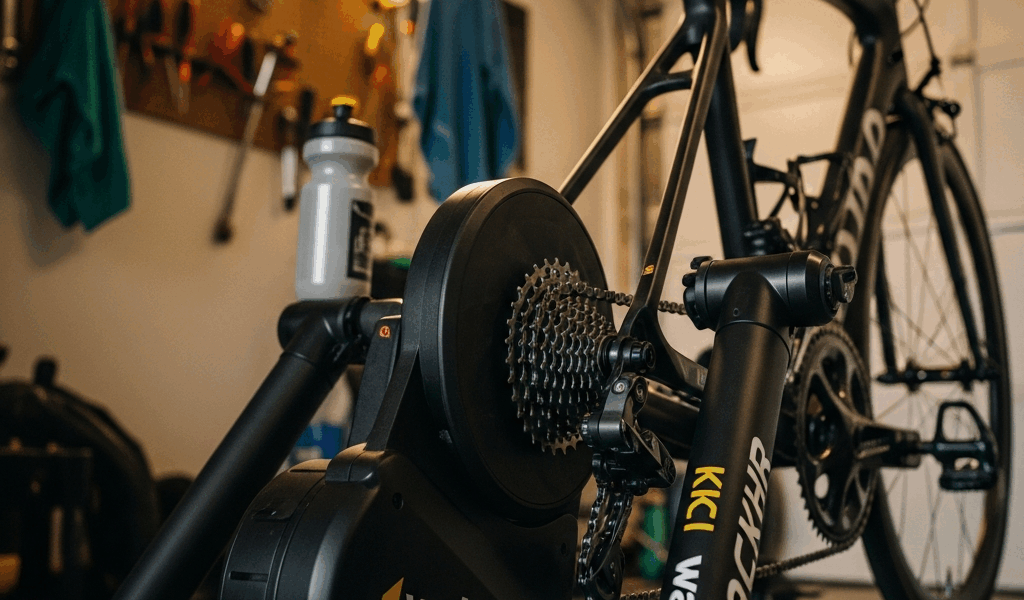
You’ve been riding your KICKR SNAP for a while now, and it mostly gets the job done. But that wheel slippage on hard intervals — the constant recalibrating, the tire wear you keep pretending isn’t happening. You catch yourself browsing the KICKR CORE listings and wondering if it actually solves those problems or if you’re just throwing money at a shinier version of the same thing.
Short answer: the CORE fixes what actually matters mid-workout. But it doesn’t fix everything. Here’s the real breakdown from someone who rode a SNAP for two winters before switching.
KICKR SNAP vs KICKR CORE — the Key Differences
The core difference (no pun intended) is how your bike connects to the trainer. The SNAP is wheel-on — your rear tire presses against a roller, and friction transfers power. The CORE is direct-drive — you pop off the rear wheel entirely, and your chain drives the trainer’s internal cassette.
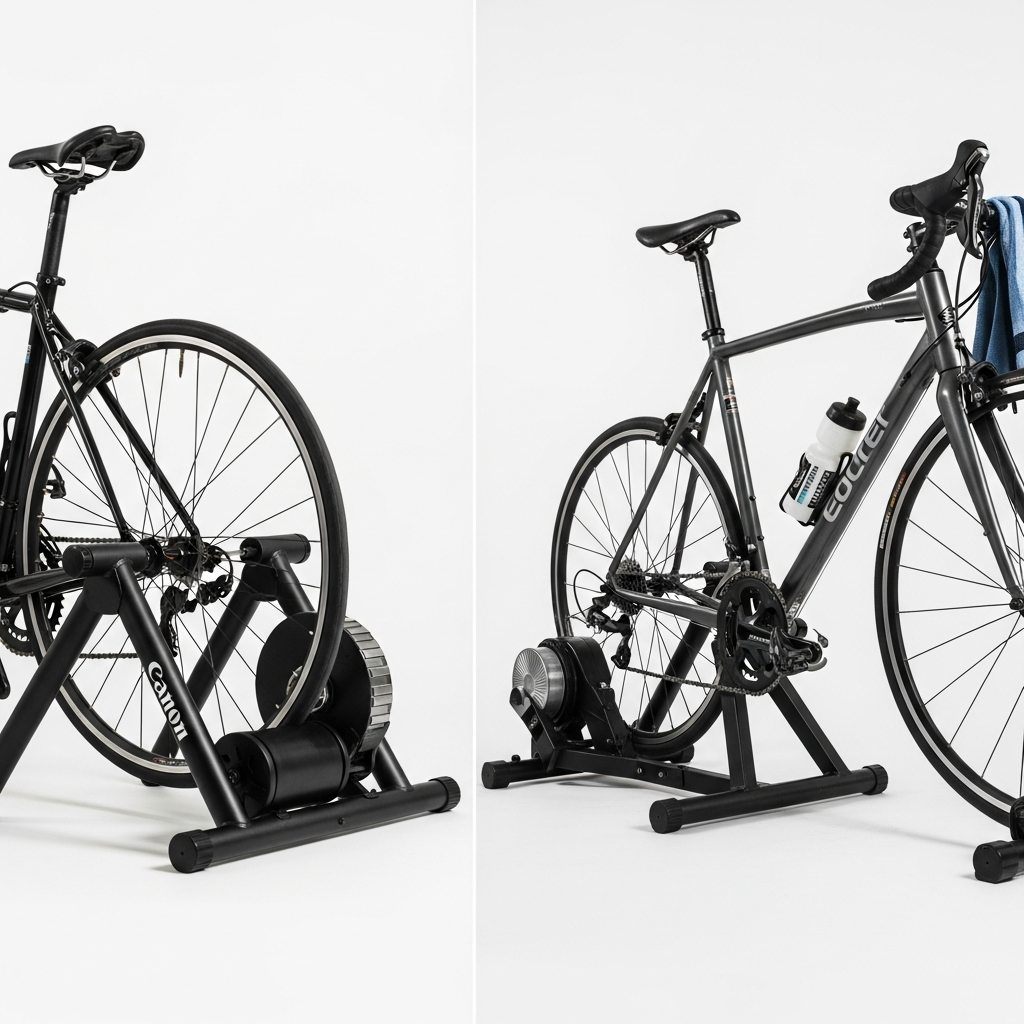
That one engineering change creates a bunch of real-world differences:
Power accuracy: The SNAP claims ±5%. The CORE delivers ±2%. Sounds like small numbers until you do the math — at 250 watts, the SNAP could read anywhere from 237 to 262. The CORE keeps you between 245 and 255. If you’re training by power zones or racing on Zwift where watts are the currency, that gap matters more than you’d think.
Max resistance: The CORE handles up to 1,800 watts versus the SNAP’s 1,500. Honestly, neither limit matters for most of us during normal training. But if you’re doing max sprints or grinding up the Alpe du Zwift at realistic gradients, the CORE handles steeper simulated inclines without flinching.
Connectivity: Both support Bluetooth and ANT+. Both work with Zwift, TrainerRoad, Rouvy, and every major platform. Zero difference here — the SNAP doesn’t lock you out of anything.
The Specific Problems the CORE Solves That the SNAP Doesn’t
If you’ve spent real hours on a SNAP, you already know these irritations. The question is whether they bug you enough to open your wallet.
Wheel slippage during hard efforts. This is the big one. On the SNAP, your tire presses against a smooth roller. When you stand and hammer — sprints, short VO2max intervals, attacks in a Zwift crit — the tire slips. You feel it as a sudden lurch, then you’re spinning uselessly for a second before the contact grabs again. I lost a Zwift race finish once because the tire broke loose at exactly the wrong moment. The CORE eliminates this completely because there’s no tire involved. Your chain bolts straight to the drivetrain. No slip. Done.
Calibration drift. The SNAP needs a spindown calibration before every single ride. Skip it and your power numbers wander — sometimes 10-15 watts over the course of an hour as the roller heats up and tire pressure shifts. I had sessions where the first 20 minutes felt weirdly easy, then the resistance suddenly corrected itself once everything warmed through. The CORE skips all of that. You clip in and go.
Tire wear. The SNAP chews through rear tires. You can (and should) buy a dedicated trainer tire if you’re riding the SNAP regularly, but that means swapping tires any time you want to ride outside. It’s a 15-minute hassle that gets old fast. The CORE doesn’t touch your tires at all — your outdoor wheelset stays ready to clip in and go.
Is the Price Difference Worth It?
The SNAP runs around $500. The CORE sits at roughly $900. A $400 gap. Not trivial, not devastating. Whether it’s worth it comes down to what your rides actually look like.
If you do structured interval training: Yes, upgrade. ERG mode on the CORE is tighter and more responsive. Power targets hold steady without the lag and slip that wheel-on trainers introduce during short, punchy intervals. If you’re running a TrainerRoad plan or doing Zwift workouts with 30-second VO2max efforts, the CORE makes those intervals feel like they’re supposed to.
If you race on Zwift: Yes, upgrade. Sprint finishes need instant response from the trainer. Wheel slippage during a race finish will make you throw things. And the ±2% accuracy means your power reads closer to what competitors on direct-drive units are putting out.
If you ride base miles and watch Netflix: Probably not worth it. If your typical session is 45 minutes of Zone 2 spinning while catching up on a series, the SNAP handles that without issue. You’re never pushing hard enough to trigger slippage, and calibration drift at low wattages is basically invisible.
What the CORE Does NOT Fix
Noise. The CORE is quieter than the SNAP, but don’t expect silence. You’ll still hear drivetrain noise — chain on cassette, the whir of the flywheel. If your partner already complains about early morning trainer sessions, the CORE helps but doesn’t solve the problem. That tire-on-roller hum goes away, but the CORE has its own subtle mechanical hum that fills the room.
Bike compatibility hassle. Going direct-drive means buying a cassette for the trainer. Running Shimano 105? Buy a matching cassette. Got multiple bikes with different drivetrains? You’re either swapping cassettes every time or buying extras. The SNAP takes any bike with a rear wheel — no additional purchase needed.
The commitment question. If you’re brand new to indoor training and not sure you’ll actually stick with it, a $500 SNAP is a reasonable experiment. Dropping $900 on a CORE before you know whether three-times-a-week indoor riding is something you’ll actually do? That’s a bet, not a purchase.
The Verdict
If you already own a SNAP and you’re tired of wheel slippage during intervals, pre-ride calibration rituals, and burning through tires — the CORE fixes all three. The upgrade makes sense for riders who train with structure, race online, or ride indoors more than three times a week.
If you’re buying your first trainer and can afford it, start with the CORE. You’ll skip the frustrations that every SNAP owner eventually hits. If $900 is a stretch right now, the SNAP is a perfectly fine starting point — just grab a dedicated trainer tire from the start and make spindown calibration part of your pre-ride routine.
The Wahoo KICKR CORE is the better trainer. The SNAP is the better deal. Pick based on how you actually ride today — not how you imagine you’ll ride next year.




Stay in the loop
Get the latest cycle train central updates delivered to your inbox.