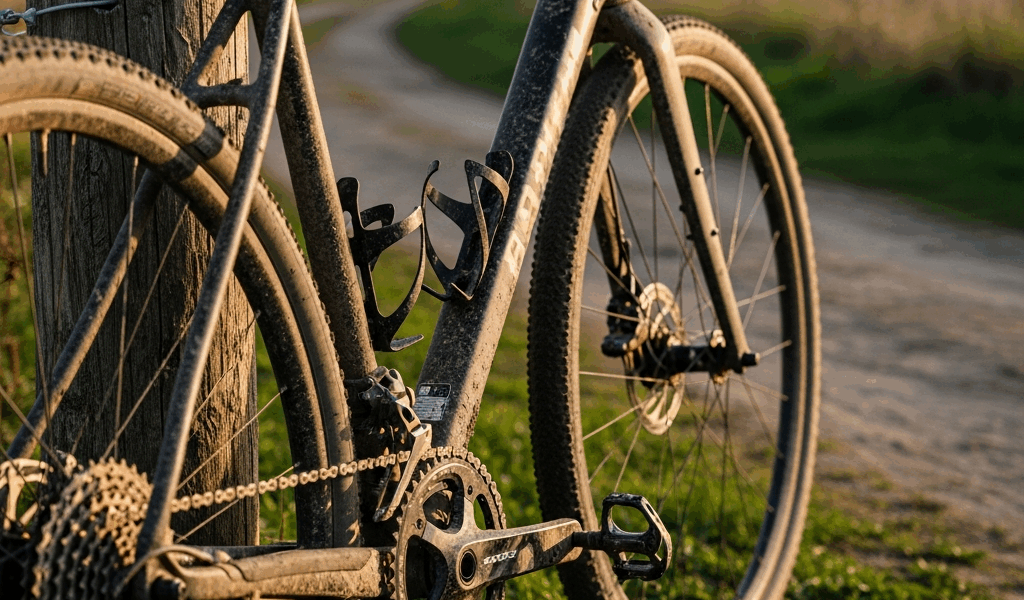
The best gravel wheelset is the one that fits your frame, axle standards, cassette, brake rotors, tires, pressure range, and total system weight before it saves a gram. For loaded riding and repairability, a current alloy wheelset such as the DT Swiss G 1800 SPLINE is a sensible starting point. The GR 1600 SPLINE is the more performance-oriented alloy option. Zipp’s 303 XPLR family targets speed with an ultrawide hookless carbon rim, but its tire and pressure requirements demand more careful compatibility checks.
This guide compares manufacturer-published information; it does not claim hands-on testing. Prices and model configurations change, so verify the exact front and rear product codes before ordering.
Best gravel wheelsets at a glance
| Wheelset family | Rim format | Best fit | Critical check |
|---|---|---|---|
| DT Swiss G 1800 SPLINE | Alloy, hooked/crotchet tubeless | Loaded trips, durability, and value | Choose the correct diameter, axle, freehub, and brake interface |
| DT Swiss GR 1600 SPLINE | Welded alloy, hooked/crotchet tubeless | Performance-focused alloy upgrade | 650b versus 700c and the exact configuration’s specifications |
| Zipp 303 XPLR S | Carbon, ultrawide hookless | Gravel speed with compatible wide tubeless tires | Approved tire, minimum tire width, maximum pressure, and frame clearance |
| Zipp 303 XPLR SW | Premium carbon, ultrawide hookless | Racing when price is secondary | Same hookless compatibility requirements plus service and crash-replacement terms |
| Keep the stock wheels | Existing equipment | Riders whose fit, tires, and reliability are already right | Define the problem an upgrade must solve |
1. DT Swiss G 1800 SPLINE: best value for loaded gravel
The current DT Swiss G 1800 SPLINE is positioned for bikepacking and long trips. DT Swiss describes a hooked/crotchet tubeless alloy rim and publishes a maximum system weight of 150 kg for the current family. “System weight” means more than rider weight: confirm whether the manufacturer includes the bike, rider, clothing, luggage, and equipment in that limit.
This is the logical shortlist choice when carrying capacity, conventional tire mounting, and a current manufacturer support path matter more than the lightest possible wheel. It is not automatically compatible with every gravel bike. DT Swiss lists multiple configurations, so match wheel diameter, front and rear axle dimensions, freehub body, cassette, and brake-rotor interface.
Choose it for: value, rough use, commuting, bikepacking, and riders who prefer a hooked tubeless rim. Skip it if: a lighter or deeper race wheel is the primary goal and the complete bike can support that choice.
2. DT Swiss GR 1600 SPLINE: best performance alloy option
The current DT Swiss GR 1600 SPLINE sits above the G 1800 family. DT Swiss offers the welded alloy platform in 650b and 700c configurations and identifies it as hooked/crotchet tubeless. The page also lists configuration-specific weights, axle standards, freehub options, included tape, and valves.
The value here is not that alloy is universally tougher than carbon; construction, impact, spoke system, load, and service all matter. The practical advantage is a performance-oriented wheel that retains a familiar hooked rim format. Compare the GR 1600 with the G 1800 by actual configuration rather than assuming the larger model number is automatically better for your riding.
Choose it for: an alloy upgrade with current gravel-specific options. Skip it if: the stock wheel works well and the budget would produce a larger improvement through tires, fit, gearing, or training.
3. Zipp 303 XPLR S: best for speed with compatible wide tires
Zipp’s current 303 XPLR family uses an ultrawide hookless rim profile. Zipp offers 303 XPLR S and premium 303 XPLR SW versions and emphasizes pairing rim and tire width as a complete aerodynamic system.
Hookless is not simply another word for tubeless-ready. Tire model, labeled size, measured width, maximum pressure, rim dimensions, and manufacturer approval all matter. Use Zipp’s current compatibility information and the tire maker’s instructions; do not mount a tire merely because its nominal width sounds suitable. Confirm the finished tire clears the frame and fork under realistic mud conditions.
Choose the S for: a carbon gravel-race wheel where compatibility is verified and cost still matters. Choose the SW for: the premium version only if its added features and support justify the difference. Skip both if: you need narrow high-pressure tires, prefer a hooked bead, or cannot confirm an approved tire combination.
Is a road wheelset suitable for gravel?
Sometimes, but “disc brake” and “tubeless-ready” are not enough. Check the wheel’s permitted tire range, system-weight limit, intended use, warranty exclusions, rim width, pressure ceiling, and impact guidance. A mid-depth road or all-road wheel can suit light, maintained gravel with an approved tire, while loaded rocky routes may exceed its intended use.
For an all-road example, our Roval Rapide C 38 guide covers the current hooked rim, published specifications, tire range, and limits. Do not transfer those specifications to an older C38 model with a similar name.
Compatibility checklist before buying
Wheel diameter
Most current gravel bikes use 700c, while some frames accept 650b for higher-volume tires. A frame that accepts both may have different tire-clearance and geometry consequences. Check the frame manufacturer’s approved combinations rather than assuming that two nominal diameters are interchangeable.
Axles and hub spacing
Record front and rear axle diameter, axle length or hub spacing, and the frame’s interface. Modern gravel often uses 12 mm thru-axles, but widths and older quick-release systems vary. The axle supplied with the bike is not the same component as the hub end caps.
Freehub and cassette
Match the freehub body to the cassette: common families include Shimano/SRAM HG, SRAM XDR, Campagnolo, and newer variants. Then verify the cassette’s speed, smallest cog, spacers, derailleur capacity, and chain compatibility. A freehub option listed by a wheel maker does not guarantee that every cassette in that brand fits.
Brake-rotor interface
Center Lock and six-bolt rotors use different attachment systems. Adapters exist for some combinations, but they add their own instructions and clearance considerations. Confirm rotor diameter, lockring type, frame and fork limits, and caliper alignment after installation.
Hooked versus hookless
A hooked rim has bead hooks; a hookless rim does not. Hookless road and gravel systems depend on approved tubeless tires and strict pressure limits. Never use a generic pressure table as permission to exceed the lower limit published by the rim, tire, or bike manufacturer.
Rim width and tire shape
Internal rim width changes a tire’s measured width and profile. A wider rim does not automatically improve every tire. Check the wheel maker’s supported tire range, the tire maker’s rim-width guidance, and actual frame clearance after mounting and inflation.
System weight and intended use
Add the rider, bicycle, bags, water, tools, and cargo according to the manufacturer’s definition. Gravel racing, commuting, touring, and loaded bikepacking impose different loads. Warranty language such as “gravel” does not necessarily cover jumps, severe impacts, or every off-road use.
Do lighter gravel wheels make a bike faster?
Lower wheel mass can change acceleration and climbing, but the size of the benefit depends on the actual mass difference, total system weight, speed changes, elevation, and aerodynamics. A wheelset should not be chosen from weight alone. Tire rolling resistance, pressure, puncture losses, hub condition, spoke reliability, and rim aerodynamics can matter more during a real ride.
Deep rims can reduce aerodynamic drag in some conditions, but they add design tradeoffs involving weight, handling, tire pairing, and cost. An ultrawide rim designed around a wide tire is different from putting that same tire on a narrow road rim.
When to upgrade—and when not to
Upgrade when the current wheels have a specific limitation: repeated hub trouble, insufficient tire support, incompatible tubeless design, inadequate load rating, difficult parts availability, or a measurable race objective. Keep the stock wheels when they are reliable, compatible, and not preventing the bike from doing its job.
For a budget bike, compare the wheelset price with the value of the entire bicycle. Our current budget gravel-bike guide helps determine whether a complete-bike change would solve more problems than wheels alone.
Setup and maintenance
- Have a qualified mechanic verify installation if axle, rotor, cassette, dish, or freehub compatibility is uncertain.
- Follow the wheel and tire makers’ tubeless tape, valve, sealant, bead-seating, and pressure instructions.
- Use the lowest applicable maximum-pressure limit in the complete system.
- Check rotor alignment, axle torque, cassette lockring, and tire clearance before riding.
- Inspect tires, rims, spokes, and hubs after impacts; hidden damage may require professional evaluation.
- Service freehub and bearings according to the manufacturer and riding conditions.
- Refresh sealant based on the sealant maker’s guidance, climate, and inspection—not a universal calendar interval.
Frequently asked questions
What rim width is best for gravel?
There is no universal number. Match internal width to the approved tire range and intended terrain. The same labeled tire can measure differently on different rims, so verify actual clearance.
Are carbon gravel wheels worth it?
They can be for racing, aerodynamics, or a specific ride-quality goal, but material alone does not establish performance or durability. Compare complete-system compatibility, service, warranty, crash policy, replacement spokes, and price.
Are hookless gravel wheels safe?
They are designed to operate safely only within the wheel and tire manufacturers’ compatible tire and pressure rules. If those cannot be confirmed, choose a compatible hooked system instead.
Can I reuse my cassette and rotors?
Possibly. The freehub, cassette, spacer requirements, rotor interface, rotor size, lockring, axle spacing, and drivetrain wear must all match. Reusing a worn cassette with a new chain may also create shifting problems.
Specifications and product availability were checked against official manufacturer pages on August 3, 2026. Confirm the exact configuration before purchase because manufacturers can revise products and compatibility guidance.



Stay in the loop
Get the latest cycle train central updates delivered to your inbox.