Cycling Safety: Protecting Yourself on Every Ride
Cycling involves inherent risk that can’t be eliminated, only managed. Cars, road hazards, weather, equipment failure, and our own mistakes create dangers that serious cyclists must acknowledge and address. This isn’t about fear—it’s about informed decision-making that lets you ride confidently for decades. The most experienced cyclists are often the most safety-conscious because they’ve seen what can go wrong.
This comprehensive guide covers visibility, traffic navigation, hazard avoidance, emergency preparation, and the mindset that keeps cyclists safe. Whether you ride busy city streets or quiet country roads, these principles apply.
Visibility: The First Line of Defense
Being seen prevents most car-bike conflicts before they develop. Drivers who see you can react appropriately; drivers who don’t see you are the primary threat. Making yourself conspicuous isn’t optional—it’s essential.
Clothing color matters, particularly in daylight. Fluorescent yellow and orange are visible at greater distances than other colors under varied lighting conditions. Bright colors look garish but serve a purpose. Save the all-black kit for group rides on closed courses.
Lights work in daylight, not just darkness. Daytime running lights, particularly flashing rear lights, catch driver attention dramatically better than no lights. Multiple studies confirm their effectiveness. Modern lights have battery life supporting regular daytime use.
Nighttime visibility requires more. Front lights need at least 500 lumens for unlit roads—more for higher speeds. Rear lights should be visible from 500+ meters. Side-visible lights or reflective gear address the common danger of intersection collisions.
Movement catches eyes faster than static visibility. Reflective ankle bands move with your pedaling, creating motion that draws attention. Flashing lights work because motion attracts the eye. Use this principle deliberately.
Navigating Traffic: Position and Prediction
Lane position communicates intent and claims space. Riding too far right invites dangerous close passes and puts you in the door zone of parked cars. Taking the lane when necessary forces drivers to change lanes to pass—safer than squeezing past with inches to spare.
Predictability helps drivers anticipate your movement. Hold your line, signal your turns, and behave consistently. Unpredictable cyclists create dangerous situations even when drivers intend no harm.
Eye contact confirms awareness. Making eye contact with drivers at intersections tells you whether they’ve seen you. If you can’t make eye contact, assume they haven’t seen you and ride accordingly.
Intersection navigation requires heightened awareness. Most car-bike collisions occur at intersections. Approach with caution, cover your brakes, and watch for turning vehicles that may not have seen you.
Door zone awareness prevents doorings—a common and dangerous collision type. Give parked cars enough space that a suddenly opened door won’t hit you. If the lane is too narrow for safe passing distance, take the lane.
Hazard Recognition and Avoidance
Road surface hazards require constant scanning. Potholes, gravel, broken glass, metal debris, and wet leaves create crash risks. Look ahead, identify hazards early, and adjust your line smoothly rather than swerving at the last moment.
Railroad tracks and expansion joints cross perpendicular to travel direction when possible. Crossing at shallow angles catches wheels and causes falls. Slow down, stand slightly, and cross as close to perpendicular as traffic allows.
Wet conditions multiply hazards. Metal surfaces—grates, manhole covers, painted lines—become slick when wet. Wet leaves are essentially ice. Oil film at the start of rain creates especially slippery conditions. Increase following distance and reduce speed.
Animals create unpredictable hazards. Dogs chase cyclists; deer jump into roadways; small animals freeze at the wrong moment. Rural riders especially must watch for wildlife and be prepared for evasive action.
Construction zones require extra caution. Changed traffic patterns, confused drivers, loose surfaces, and workers not expecting cyclists create concentrated hazards. Consider alternate routes when major construction blocks your normal path.
Crash Avoidance Techniques
Emergency braking uses both brakes with rear-weight bias. Shift weight back as you brake hard to prevent front-wheel lockup. Practice emergency stops regularly—the skill must be automatic when you need it.
Quick turns involve leaning the bike more than your body, pressing on the handlebar in the direction you want to turn, and looking where you want to go. Counter-steering feels counterintuitive but enables rapid direction changes.
Bunny hopping small obstacles is safer than swerving into traffic. At speed, lifting the front wheel over debris and then unweighting the rear prevents punctures and crashes. This skill requires practice but pays dividends.
Taking a hit sometimes beats the alternative. If impact is inevitable, sometimes relaxing into a controlled fall causes less damage than desperate avoidance maneuvers. This requires split-second judgment and should be a last resort.
Group Riding Safety
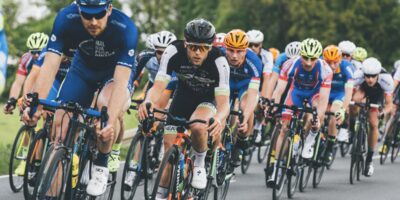
Paceline discipline keeps everyone safe. Hold your line, maintain steady speed, don’t overlap wheels, and call out hazards. One unpredictable rider endangers the entire group.
Communication matters in groups. Call “hole,” “car back,” “slowing,” and other relevant warnings. Hand signals augment verbal calls. The rider in front can’t see what’s behind; the rider in back can’t see what’s ahead.
Skill matching determines appropriate groupings. Riding with cyclists of similar ability prevents dangerous speed mismatches. No-drop rides work for mixed groups; competitive rides assume matched abilities.
Spread out in traffic. The compact formations that work on open roads become problematic in traffic. Drivers can’t pass safely, and a single problem affects more riders. Single file in traffic zones.
Weather-Related Safety
Lightning poses genuine danger to exposed cyclists. If you can hear thunder, lightning is within striking range. Seek shelter in substantial buildings—not under trees or in small structures. If caught in the open, crouch with feet together, minimizing ground contact.
High winds affect handling, particularly on descents or with aero equipment. Deep-section wheels act as sails. Gusting winds can push you into traffic lanes. Reduce speed and increase vigilance in windy conditions.
Cold weather requires attention to extremities. Numb hands reduce braking control; numb feet affect pedaling. Cover extremities adequately—more than you think necessary based on core temperature.
Heat illness threatens on hot days. Hydrate aggressively, reduce intensity, and recognize symptoms of heat exhaustion (heavy sweating, weakness, cold skin) versus heat stroke (hot dry skin, confusion). Heat stroke is a medical emergency.
Mechanical Safety
Pre-ride checks catch problems before they strand you or cause crashes. Quick checks include tire pressure and condition, brake function, secure wheels and handlebars, and nothing loose or rattling.
Tire inspection prevents blowouts. Look for cuts exposing casing, worn tread, bulges, or embedded debris. A tire that might fail is safer replaced at home than riding until failure.
Brake inspection ensures stopping power when you need it. Pads should have adequate material and even wear. Disc brake rotors should be straight with no oil contamination. Test brakes before every ride.
Quick release and thru-axle verification prevents wheel separation. A wheel that comes loose in a front fork is catastrophic. Develop the habit of confirming wheel security before every ride.
Emergency Preparedness
Identification should accompany every ride. A Road ID bracelet, ID card, or phone ICE (In Case of Emergency) contact enables responders to help you and contact your family.
Medical information matters for emergencies. Allergies, medications, and existing conditions affect treatment. Carry this information if relevant.
Phone and emergency contacts allow calling for help. A cell phone handles most emergencies. Ensure someone knows your route and expected return for longer rides.
Basic first aid knowledge helps. Knowing how to handle common injuries—road rash, minor cuts, potential fractures—provides options beyond waiting for help.
Emergency cash covers unexpected needs. Tubes, rides home, or post-accident necessities might require money. Carry a small amount.
The Safety Mindset
Assume you’re invisible. Ride as if no driver sees you until proven otherwise. This defensive assumption prevents relying on right-of-way to protect you.
Predict scenarios. What if that parked car door opens? What if that car turns right without signaling? What if that dog gives chase? Mental preparation enables quick responses.
Accept imperfect conditions. Sometimes roads are dangerous, drivers are distracted, or conditions are challenging. The choice to ride includes accepting these realities and managing them.
Know when to stop. Ice, severe weather, illness, or accumulated fatigue create conditions where the safe choice is not riding. Wisdom includes recognizing limits.
Learn from close calls. Every near-miss contains a lesson. Analyze what happened, why, and what could have been different. Close calls are opportunities to prevent actual crashes.