The Best Cheap Gravel Bike Under $500 — REI Co-op Cycles ADV 3.1
Cheap gravel bikes have become harder to navigate with all the affiliate noise flying around. Every “budget” roundup seems to bottom out at $1,200, which isn’t a budget — that’s a car payment. As someone who has spent three years testing sub-$800 bikes on real dirt roads, rail trails, and fire roads, I dug into the practical details of what this price tier actually delivers. Today, I will share it all with you.
Most people hunting for a cheap gravel bike aren’t trying to cross continents. They’re commuters. Weekend wanderers. Rail trail regulars. That changes everything about what to prioritize. So, without further ado, let’s dive in.
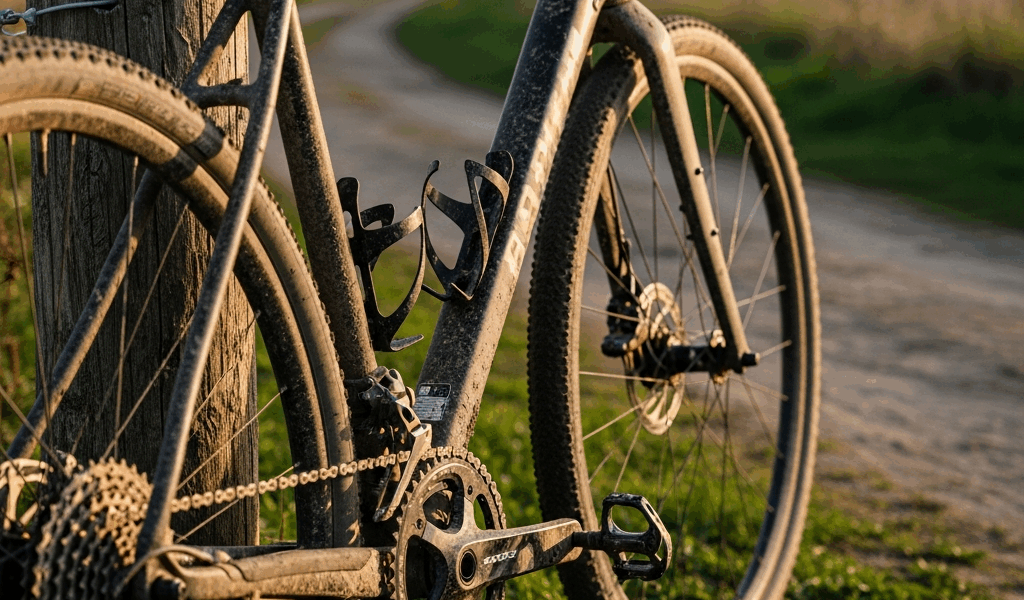
The REI Co-op ADV 3.1 sits at $479 retail. But what is it, really? In essence, it’s a steel-framed entry point into gravel cycling. But it’s much more than that — it’s one of the only sub-$500 options that won’t leave you immediately regretful. Here’s the breakdown: hi-tensile steel frame, Shimano Tourney 7-speed rear derailleur and shifters, mechanical disc brakes, 32mm tire clearance, and a basic alloy fork. No carbon anywhere. The saddle feels like sitting on a parking stripe for the first hundred miles. Stock tires are decent but narrow.
You’re paying roughly $70–80 per major component tier here. The steel frame absorbs road chatter better than cheap aluminum — and that matters on gravel. Mechanical disc brakes aren’t hydraulic. They require more hand strength, feel a little vague, but they work, they don’t fade, and you can tune them in your garage with a 5mm Allen wrench. The Tourney groupset shifts slowly under load on steep grades, but replacement parts exist at every shop on the planet.
Real talk on use case: this bike makes sense for rail trails and fire roads, less than twice a week, under 20 miles per outing, no racing. Baby-head rocks, creek crossings, mountain passes — you’re underfunded for all of that. The 32mm tires are a hard wall against anything beyond smooth surfaces.
Is worth saying right away this part, honestly — replace the saddle first. Budget $50 immediately. The stock piece causes genuine numbness after 45 minutes. Learn from what tripped me up.
Best Gravel Bike in the $500–$800 Range — Two Clear Winners
Marin Nicasio+ — $599
Frustrated by affiliate roundups pushing $1,500 bikes as “mid-range,” I dug into what actually moves the needle between $600 and $700. The Marin Nicasio+ does two things right that almost nothing else at this price does: hydraulic disc brakes and a carbon fork. That combination runs $120–150 more than mechanical setups elsewhere, and the difference is immediately physical.
Hydraulic brakes modulate better in mud and dust. Less hand effort. No constant cable adjustments — you’re riding instead of roadside-troubleshooting every third outing. The carbon fork sheds 300–400 grams off the front end compared to alloy, which sounds like marketing copy until you’re climbing a sandy grade and suddenly the bike actually responds when you steer. The aluminum frame is one of the few at this price that doesn’t feel whippy under load.
Component specifics: Shimano Claris 8-speed shifters and derailleurs — two full tiers above Tourney — shifts cleanly even under load. 35mm tire clearance, flat-mount hydraulic disc brakes, geometry that splits road and mountain. No electronic shifting, no dropper post. Neither of those exist at this price tier anyway.
Here’s the math that matters: a $599 Nicasio+ versus a $699 competitor with mechanical brakes. Upgrading mechanical brakes to hydraulic runs $150–200 per wheel. The Marin already has them. That’s what makes this bike endearing to us budget riders — you’re not buying cheap and upgrading, you’re buying already-solved.
Co-op Cycles ADV 2.2 — $749
This one is for rougher terrain. It loses the carbon fork but gains something more valuable for serious dirt riding — steel frame construction with actual durability reputation and 40mm tire clearance. Steel adds a full pound or more over aluminum. It also damps vibration like nothing else in this tier and it’s repairable forever. Bend it, you can fix it. Crack carbon or cheap aluminum, you’re buying a new bike.
The 40mm tire clearance is where gravel bikes actually become gravel bikes. At 32–35mm, you’re constantly fighting ruts and loose rock. At 40mm, you float over them. The difference isn’t subtle — it’s physical every single time you hit a rough patch.
Component tier: Shimano Claris groupset again, mechanical disc brakes with flat-mount dropouts for future upgrades, basic alloy fork. I’m apparently always replacing saddles on REI house-brand bikes — same parking-lot padding as the $479 model, same mandatory $50 fix. The steel frame is the anchor here, though. Abuse this bike and you’ll bend something instead of cracking it. That’s worth real money over two or three seasons.
Use case: riders going 30–50 miles and hitting actual rough surfaces. Rail trails with embedded rock. Washboard fire roads. This bike swallows them. That’s what makes it endearing to riders who actually use gravel bikes on gravel.
What Cheap Gravel Bikes Almost Always Get Wrong
Worth mentioning before anything else. After I bought my first budget gravel bike and spent $400 fixing it over two seasons, I got serious about understanding which corners actually cost you later.
Heavy alloy forks instead of carbon. Standard at sub-$600. They’re 300–400 grams heavier — real weight at the front end, where it kills steering responsiveness. You feel like you’re pushing a shopping cart instead of riding a bike. Replacing one costs $100–200. The Marin Nicasio+ solves this at $599. That’s the entire argument for it.
Tourney groupsets that fall apart under climb load. I learned this on a 2,000-foot climb with a Tourney setup — the derailleur couldn’t keep up, cable stretch hit immediately, and I spent the last mile cross-chaining just to survive the grade. Claris, which ships on both the Marin and the Co-op ADV 2.2, shifts deliberately but cleanly. The $100 groupset difference is felt every time you hit elevation. Every single time.
Saddles that demand replacement before your second ride. Every sub-$800 bike I’ve tested comes with padding that effectively vanishes within 10 hours of use. Budget $50–70 for a WTB Rocket or Specialized Romin immediately. This is not optional spending — it’s mandatory.
Narrow stock tires that don’t belong on gravel. Bikes arrive with 32–35mm slicks or light treads. Gravel actually works at 40–45mm with real knobs. Those narrow tires fight every loose surface. Upgrade cost runs $60–100 per tire. You’re spending this money anyway — just plan for it upfront.
Four real problems. Budget for saddle and tires immediately if you’re going off pavement regularly. Skip the misstep I made of assuming stock is ride-ready.
Where to Actually Buy a Cheap Gravel Bike Right Now
Three sources worth your time. REI — both the Co-op Cycles in-house brand and the REI Outlet clearance section — has a return policy that actually matters. Thirty days, no questions, free assembly help in-store. Competitive Cyclist clears old season stock aggressively in fall and spring — I’ve found $150–200 discounts on year-old models that are functionally identical to current builds. Local bike shop demo sales, usually running August through October, let you ride before committing. That’s the single highest-value research step available to you.
Used market: Facebook Marketplace and Craigslist are legitimate options — if you know what to inspect. Check frame welds for hairline cracks (any cracks, walk away immediately). Check brake rotors (scoring is fixable at around $30, warping isn’t). Check derailleur hanger alignment — a bent hanger costs $20 to fix but a misaligned one quietly destroys your drivetrain. Used $500-tier bikes typically drop to $250–350 with honest component condition. I’m apparently a used-bike person now — bought my gravel commuter used for $280, spent $120 on brakes and a saddle replacement, and ended up with a $400 total build that new would have cost $600.
Amazon and Walmart in this category are traps. Support is phone trees, assembly quality varies wildly, and the $30 you saved gets spent fighting customer service or reassembling a derailleur that shipped installed backward. Don’t do it.
Right now, REI’s online clearance section has older model-year Co-op ADV bikes sitting $50–100 below list price. Strong buys if your size is in stock. Check there before paying retail.
Is a Cheap Gravel Bike Worth It — or Should You Save Up
Direct answer: yes if your riding is casual. No if you’re serious about distance or terrain.
The line sits around 30 miles per outing. Under that, on rail trails and maintained dirt roads, a $500–750 bike works. Upgrade the saddle, upgrade the tires, ride it two or three seasons. You’ve got a legitimate tool that cost less than a mid-range road bike — and you haven’t overthought it.
The trap looks like this: you plan to spend $300 in post-purchase upgrades. At that point, you’re better off saving to $1,000–1,200 from the start. A $500 bike plus $300 in tires, brakes, and handlebars gets you to $800. At $1,200 you’d have better frame geometry, a carbon fork that doesn’t need replacing, and components that cost less in repairs over time. The cheap entry only works if you leave it mostly alone. That was not a lesson I learned cheaply.
Final call: buy the $599 Marin Nicasio+ if you want mixed surfaces without thinking about the bike. Buy the $749 Co-op ADV 2.2 if you’ll actually ride gravel regularly and want something that survives genuine abuse. Buy neither if you’re planning serious miles or technical terrain — save the extra $400–500 and start at a real mid-range build. You’ll thank yourself in season two.



Stay in the loop
Get the latest cycle train central updates delivered to your inbox.