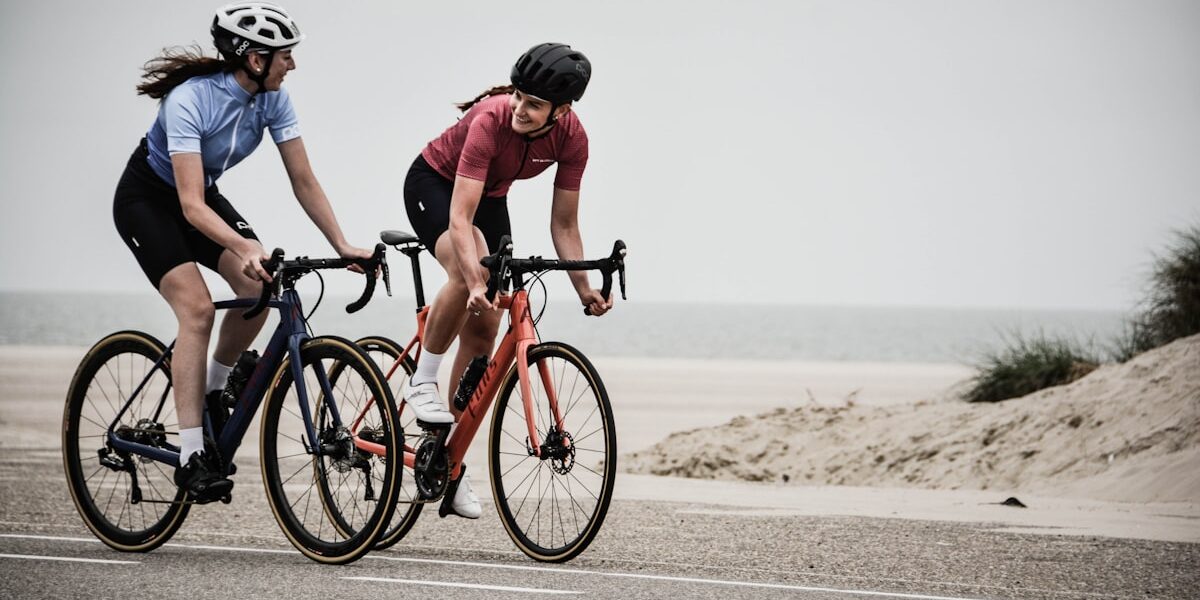
The short answer disappoints people who want simple rules: it depends. Power output determines calorie burn, not location. But the dynamics of how you produce that power differ dramatically between your living room and the open road. Understanding these differences helps you train smarter regardless of where you ride.
Why Indoor Feels Like Torture
Indoor training feels brutally hard compared to outdoor rides at the same average power, and there are concrete reasons why.
On a trainer, you never coast. Every second requires active pedaling, eliminating the micro-recoveries that accumulate during outdoor rides when you soft-pedal through corners, descents, or stop signs. Those little breaks add up to meaningful recovery time that simply doesn’t exist indoors.
Heat management indoors is fundamentally different from outdoor riding. Outside, you move through air at 15-25 mph, creating constant airflow that evaporates sweat and regulates core temperature. Indoors, even with multiple fans, airflow is inadequate. Core temperature rises faster, heart rate increases to support thermoregulation, and perceived exertion spikes even though mechanical work hasn’t changed.
The mental load of staring at a wall or screen for 90 minutes while maintaining steady power requires psychological endurance that outdoor riding doesn’t demand. The monotony itself becomes a stressor that elevates perceived exertion beyond what the physical effort alone would produce. This psychological component matters more than most riders realize.
The Actual Math
If you ride at 200 watts for one hour, you burn approximately the same calories whether that occurs indoors or outdoors. Mechanical work is mechanical work. The human body converts chemical energy to mechanical energy at roughly 20-25% efficiency regardless of setting. The remaining 75-80% becomes heat, which you must dissipate through sweating and breathing.
A 200-watt hour equals 720 kilojoules of mechanical work. Accounting for human efficiency, you burn approximately 860-900 calories to produce that work. The physics doesn’t care about your surroundings.
The caveat is matching power outdoors to indoor workouts without strict discipline. The dynamic nature of outdoor riding creates power variability that often reduces average power even if normalized power or peak efforts are similar. You might think you rode as hard outside, but power files often reveal otherwise. Self-perception and actual output frequently diverge.
Environmental Variables Outdoors
Wind resistance outdoors consumes enormous amounts of power at higher speeds. At 20 mph on flat ground, roughly 80-90% of your power goes to overcoming air resistance. A moderate headwind can increase required power by 20-40 watts. Conversely, tailwinds reduce required power significantly, making the same effort feel easier.
Terrain creates power variability impossible to replicate indoors. Punchy rollers force surges to 300+ watts followed by recovery at 100 watts. These fluctuations mean average power tells an incomplete story. Normalized power attempts to account for this variability, but it still doesn’t perfectly represent metabolic cost of constant surging.
Stops and interruptions accumulate during outdoor rides. Traffic lights, stop signs, mechanical issues, regrouping all create periods of zero power output. A three-hour outdoor ride might include 20-30 minutes of actually stopped time, reducing total work performed compared to three hours of continuous indoor riding.
Temperature extremes affect outdoor calorie burn significantly. Cold weather increases caloric expenditure through shivering thermogenesis and the metabolic cost of maintaining core temperature. Extremely hot conditions increase cardiovascular strain and can reduce power output, but total calorie burn may increase due to thermoregulation demands.
Why Indoor Works
Structured intervals are vastly more effective indoors. You can prescribe exactly 4×8 minutes at 95% FTP with 4-minute recoveries and execute it perfectly. Outdoors, finding uninterrupted roads, managing traffic, and controlling terrain make precise interval execution difficult. This precision produces superior training adaptations per hour invested.
Time efficiency indoors is unmatched. A 90-minute indoor session delivers 90 minutes of training stimulus. The equivalent outdoor ride might require 2.5 hours accounting for preparation, traffic, stops, and return time. For time-constrained athletes, indoor training provides better return on time investment.
Bad weather becomes irrelevant indoors. Rain, snow, ice, and extreme heat don’t cancel workouts. Consistency is the foundation of training adaptations, and indoor training removes environmental barriers to consistency. You can train year-round regardless of what’s happening outside your window.
Safety is a legitimate indoor advantage. No distracted drivers, no road hazards, no risk of mechanical failures miles from home. You can push to complete failure during intervals without worrying about the ride home. This allows genuinely maximal efforts that would be risky outdoors on public roads.
Why Outdoor Works
Bike handling skills only develop outdoors. Cornering at speed, descending technical roads, riding in groups, and managing terrain all require real-world practice. Indoor training builds the engine, but outdoor riding teaches you to use it effectively. No amount of Zwift racing replaces actual road racing skills.
Mental freshness from outdoor riding cannot be overstated. Changing scenery, fresh air, and sense of exploration provide psychological benefits that combat training burnout. Many athletes sustain motivation for outdoor riding much longer despite similar physiological stress. The variety keeps training interesting.
Real-world fitness includes adaptation to terrain variability, wind resistance, and position changes that don’t occur indoors. If your goal is outdoor racing or events, outdoor training provides specific adaptations that translate directly to performance in those settings.
Longer rides are more tolerable outdoors for most riders. A five-hour indoor ride is psychological torture. A five-hour outdoor ride through scenic terrain feels adventurous. Building the endurance base for century rides or gran fondos is far more achievable outdoors where the time passes more pleasantly.
The Smart Approach
The most effective training programs incorporate both indoor and outdoor riding strategically. Use indoor training for high-quality interval sessions where precision matters. Sweet spot intervals, threshold efforts, and VO2 max work benefit enormously from the controlled indoor environment.
Use outdoor riding for endurance development, recovery rides, and skill work. Long Zone 2 rides are more sustainable outdoors, and the skill development from outdoor riding transfers to better race performance.
Track training load using TSS or similar metrics rather than just duration or distance. This lets you compare indoor and outdoor workouts based on physiological stress rather than arbitrary metrics. A 60-minute indoor threshold session might produce the same training stimulus as a 90-minute outdoor tempo ride.
Consider weather and time constraints when choosing training location. If you have 75 minutes before work, an indoor session delivers better training stimulus than a rushed outdoor ride. If you have a free Saturday and good weather, the outdoor ride provides psychological benefits and skill development that indoor training cannot match.
The best approach isn’t choosing one over the other but using each where it provides maximum benefit. Indoor training excels for structured workouts, time efficiency, and consistency. Outdoor riding excels for skill development, mental freshness, and long endurance efforts. The combination produces better cyclists than either approach alone.




Stay in the loop
Get the latest cycle train central updates delivered to your inbox.