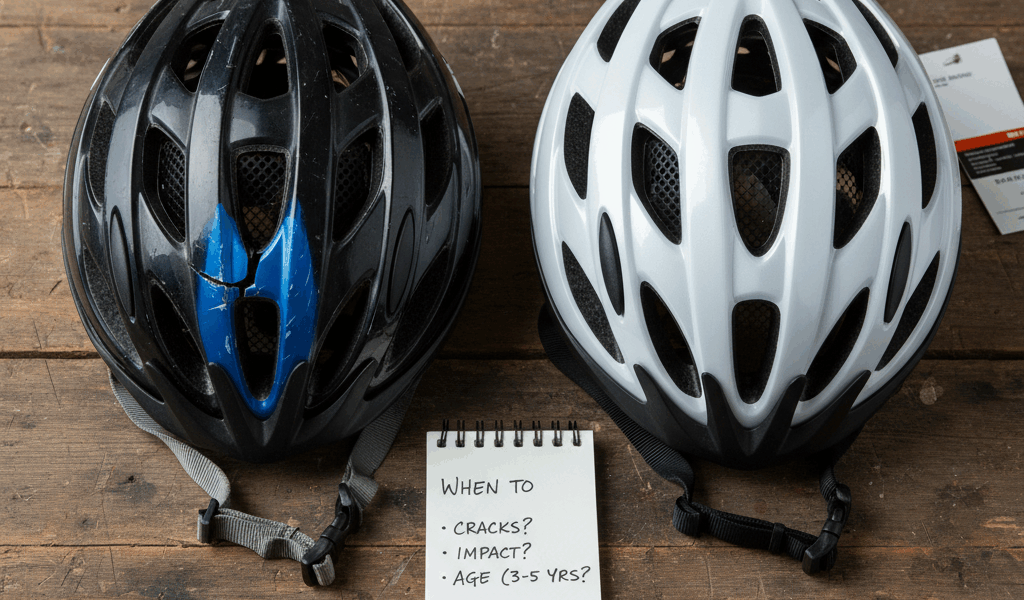
Cycling helmets are designed as single-impact devices. Once they’ve absorbed crash energy, their protective capacity is compromised even if damage isn’t visible. Understanding when to replace your helmet is a safety decision that shouldn’t be based on appearance alone.
After Any Crash With Impact
Replace your helmet immediately after any crash where your head contacts the ground, a vehicle, or another object. The foam core compresses to absorb impact energy, and this compression is permanent. The helmet has sacrificed its structure to protect your brain and cannot provide the same protection a second time.
Visible damage is not required for replacement. Helmet foam can compress internally without cracking the outer shell. You might see no external damage but still have compromised protection. Manufacturers universally recommend replacement after any impact, regardless of visible damage.
Minor drops while carrying the helmet generally don’t require replacement unless the helmet impacts a hard surface from significant height. Dropping an empty helmet on pavement from waist height might compress foam enough to warrant replacement. When in doubt, replace it. The cost of a new helmet is trivial compared to the cost of brain injury.
Every 3-5 Years Due to Degradation
Helmet materials degrade over time even without crashes. The expanded polystyrene (EPS) foam that absorbs impacts slowly deteriorates from UV exposure, heat cycles, and chemical breakdown. This degradation reduces the foam’s ability to compress predictably during impacts.
Sweat accelerates helmet degradation. The salts and acids in sweat break down foam and adhesives over time. If you’re a heavy sweater or train in hot climates, your helmet degrades faster than someone riding in cool, dry conditions with minimal sweating.
Manufacturers typically recommend replacement every 3-5 years, with heavier use pushing toward the shorter interval. If you ride daily year-round, replacing every three years is prudent. Weekend warriors might extend to five years, but beyond that, material degradation becomes a legitimate concern.
Check the manufacturing date on your helmet. Many helmets have a sticker inside showing the production date. If your helmet is pushing six or seven years old, it’s well past recommended replacement regardless of apparent condition.
Damaged Straps or Buckles
A helmet’s retention system is as critical as the foam itself. If the helmet rotates or comes off during impact, the foam cannot protect you. Frayed straps, damaged buckles, or stretched webbing compromise retention and require replacement.
Inspect straps regularly for fraying where they thread through the helmet or contact buckles. These high-stress points wear first. If you see exposed threads or thinning webbing, the strap could fail during impact.
Buckles should click positively and release only when intended. If your buckle sometimes releases unintentionally, or if you have to force it to click closed, it’s worn beyond safe use. Some manufacturers sell replacement retention systems, but if your helmet is old enough for buckle failure, it’s likely time for complete replacement.
The rear retention dial or cradle system should adjust smoothly and hold position. If the adjustment slips or the cradle cracks, the helmet won’t stay in proper position during riding or impact. This is particularly common on older helmets where plastic components become brittle.
Poor Fit
Helmets must fit properly to provide protection. If your helmet no longer fits correctly, it needs replacement regardless of age. Common fit issues include the helmet sitting too high on your forehead, excessive front-to-back movement, or side-to-side rocking.
Foam padding compresses permanently over time, often causing helmets to feel loose after years of use. Replacement pads can help temporarily, but if the helmet shell itself is too large or the retention system cannot be tightened adequately, you need a new helmet.
Weight changes affect helmet fit. Significant weight loss or gain can change head size enough to compromise helmet fit. A helmet that fit perfectly at 180 pounds might be too loose at 160 pounds.
Hairstyle changes sometimes affect fit. Growing hair long, shaving your head, or changing from thin to thick hair can alter how a helmet sits. If you cannot achieve proper fit due to hair changes, you need a different helmet.
Safety Standards Evolve
Helmet safety technology advances continuously. A helmet from 2015 meets different standards than one from 2025. Newer helmets often incorporate MIPS (Multi-directional Impact Protection System) or similar rotational impact protection that older helmets lack.
MIPS and competing systems address rotational forces during angled impacts, which traditional helmets don’t mitigate well. This technology reduces brain injury risk in real-world crashes, which rarely involve perfectly perpendicular impacts to the helmet crown.
Improved ventilation in modern helmets isn’t just about comfort. Better airflow reduces heat stress and allows you to wear the helmet properly positioned rather than pushed back for cooling. A helmet worn incorrectly for comfort provides poor protection.
If you’re riding with a helmet design from the early 2010s or earlier, modern helmets offer measurably better protection and comfort. The safety improvement alone justifies replacement even if your old helmet hasn’t been crashed and appears intact.
Don’t Trust Used Helmets
Never buy or use a used helmet. You cannot know its crash history. The previous owner might not disclose crashes, or might not remember minor impacts that compromised the foam. The risk isn’t worth the modest cost savings.
Hand-me-down helmets from family or friends carry the same risk. Even if you trust their honesty, they might not remember every drop or bump. Helmets are personal safety equipment that should be purchased new.
Stolen or recovered helmets should be replaced. If your bike was stolen and recovered, you don’t know if the helmet experienced impacts during the theft or recovery. Replace it to ensure protection.
Practical Replacement Strategy
Write the purchase date inside your helmet with permanent marker when you buy it. This removes guesswork about age and helps you track the replacement timeline.
Inspect your helmet monthly for damage. Check straps for fraying, buckles for function, foam for compression or cracks, and the shell for damage. This takes 30 seconds and can identify problems before they become safety issues.
Budget for helmet replacement as part of cycling costs. Setting aside $20-30 per year means you’ll have funds ready when replacement is needed rather than delaying due to cost. Quality helmets cost $60-150, making the annual cost modest.
Don’t leave helmets in hot cars or direct sunlight when not in use. Heat accelerates foam degradation. Store helmets in cool, dry places away from direct sunlight to maximize their useful life.
If you crash hard enough to think “I should replace this helmet,” the answer is yes. Your brain is worth more than the cost of a new helmet. When doubt exists, err on the side of replacement.
The helmet replacement guidelines exist because brain injuries are devastating and permanent. The inconvenience and cost of replacing a helmet every few years is trivial compared to the consequences of reduced protection during a crash. Treat helmet replacement as non-negotiable safety maintenance, not an optional expense.



Stay in the loop
Get the latest cycle train central updates delivered to your inbox.